
Of all the small frictions of retiring abroad, one of the most persistent is the exchange rate, the quiet daily arithmetic of watching your dollars turn into pesos or baht or euros, and the low worry that a swing in the currency markets could shrink your purchasing power overnight. The Carters, a composite couple assembled from the real patterns of the many American retirees who have made this move, decided to sidestep that worry entirely by retiring to one of the only places where it does not exist: Ecuador, a country that uses the actual US dollar as its official currency. They settled in Cuenca, a beautiful colonial city high in the Andes, living on about eighteen hundred dollars a month, and eighteen months in, the thing they appreciate most is the one they never have to think about. Here is the dollar advantage that drew them, what eighteen hundred dollars buys in Cuenca, how the easy visa works, why you should test it before committing, the city and its one physical catch, and the honest reality a year and a half in. It is one of the most financially serene retirements going, with a single asterisk written in thin mountain air.
What follows is the dollar that removes the biggest friction, the money math, the easy visa, the city and the altitude, and the honest eighteen-month verdict.
The Dollar That Changes Everything
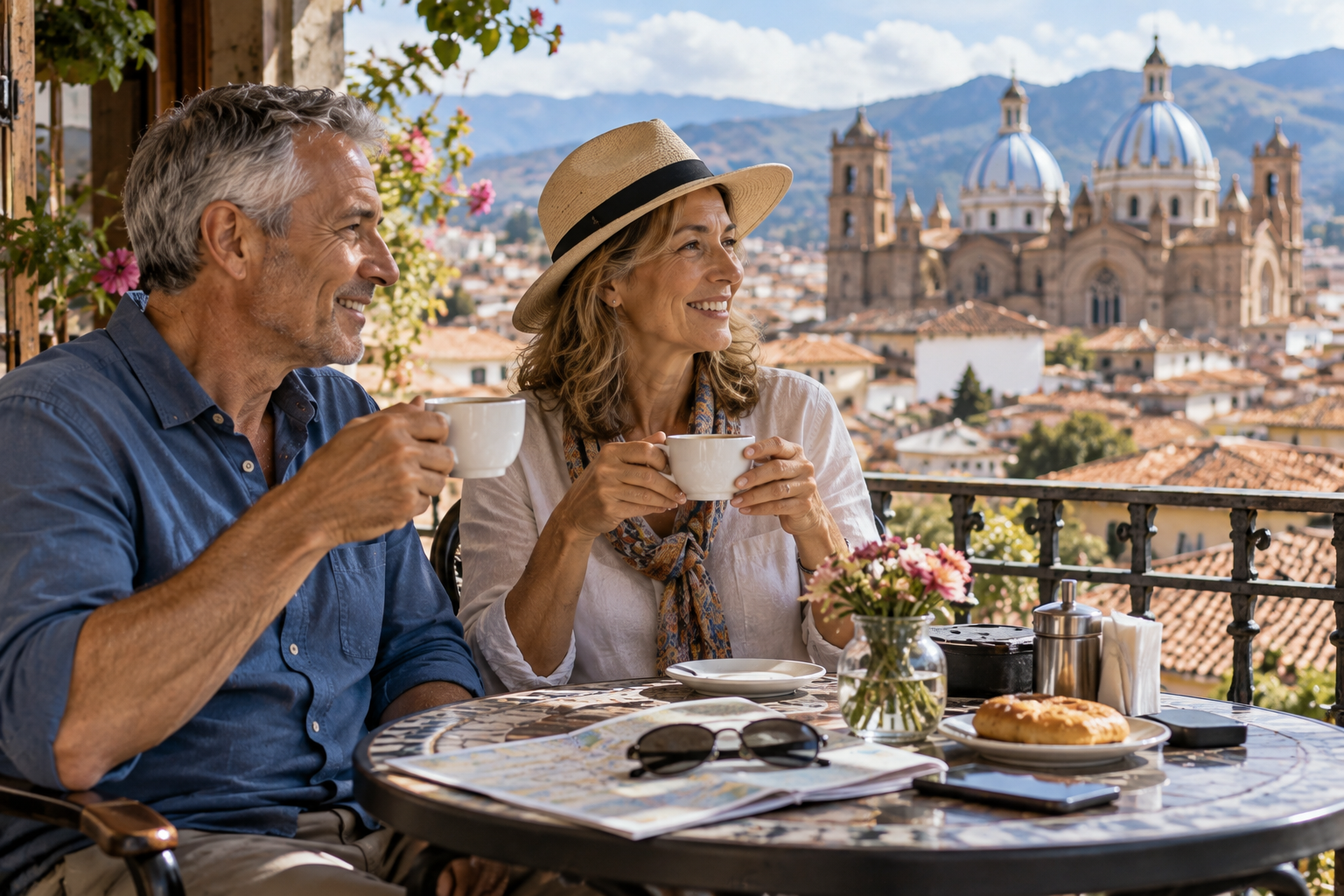
The single most distinctive thing about retiring in Ecuador, and the feature that quietly matters most day to day, is that the country adopted the US dollar as its official currency back in 2000 and has used it ever since. For an American or anyone earning in dollars, this removes the biggest recurring friction of living abroad in one stroke. There is no currency to convert, no exchange rate to track, no watching your purchasing power rise and fall with a foreign central bank’s decisions. Your Social Security or pension arrives in dollars and is spent in dollars, your US bank accounts and credit cards work seamlessly, and the price on a menu is simply a price in the money you already think in.
It is hard to overstate how much mental weight this lifts until you have lived with the alternative. A retiree in Mexico or Thailand or Portugal lives with a constant low hum of currency awareness, their fixed dollar income worth a little more in some months and a little less in others, their budgeting always shadowed by an exchange rate set by forces an ocean away that they can neither predict nor control. It is a small anxiety, but it never fully goes away, and over a long retirement it quietly adds up.
The Carters have none of that. Their eighteen hundred dollars is eighteen hundred dollars, this month and every month, immune to the swings that quietly erode or inflate everyone else’s budget abroad. For a couple on a fixed income, that stability and simplicity is worth a great deal, and it is the thing that sets Ecuador apart from every other popular retirement destination in Latin America. It is not the only reason to go, and probably not the first one that catches the eye, but it is the reason that keeps quietly paying off, invisibly, every single day, long after the novelty of cheap prices and pretty streets has become ordinary. The best features of a place are often the ones you stop noticing because they simply never cause you trouble, and the dollar is exactly that.
The Money: $1,800 in Cuenca
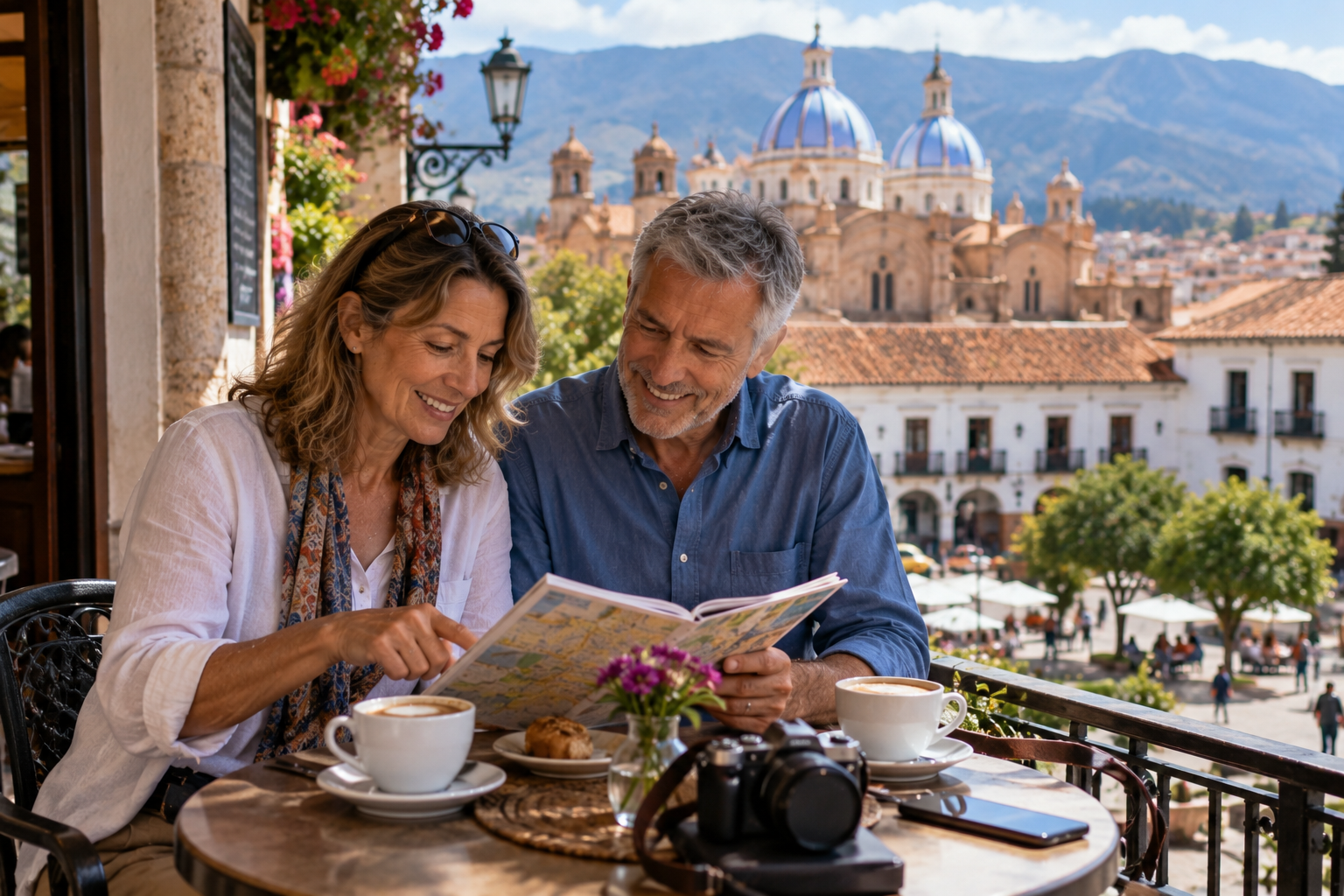
On top of the dollar stability sits a genuinely low cost of living, and the combination is what makes Cuenca work on a modest income. A couple can live comfortably on roughly fourteen hundred to twenty-four hundred dollars a month, so the Carters’ eighteen hundred lands squarely in comfortable territory, covering a nice apartment, good food, healthcare, transport, and a pleasant social life. Rent is the anchor of the savings, with furnished apartments in the desirable expat areas renting for a small fraction of US prices, and everyday costs, from the abundant produce markets to restaurants to household help and services, running dramatically lower than back home. It is the kind of place where you stop flinching at the bill, because the bill is always small.
What that money buys in Cuenca is not a bare-bones existence but a genuinely good life, which is the whole appeal. The same comfortable lifestyle the Carters enjoy on eighteen hundred dollars would cost several times as much in most American cities, and the gap is wide enough that a modest Social Security income, which would feel tight and worried in the United States, feels relaxed and even generous in Cuenca, with real room for the occasional splurge, a housekeeper, and some travel. The arithmetic does not just work; it transforms the texture of the retirement. As always, the honest caveat is that the savings come from living locally, since imported American goods carry a premium, so the couples who thrive embrace the local food, housing, and rhythms rather than trying to recreate an expensive American life in the Andes. But for retirees willing to live the Cuenca way, the arithmetic is genuinely liberating, and paired with the dollar’s stability, it produces exactly what a fixed-income retiree wants most: a comfortable life whose budget does not keep them up at night.
The Visa, Plainly
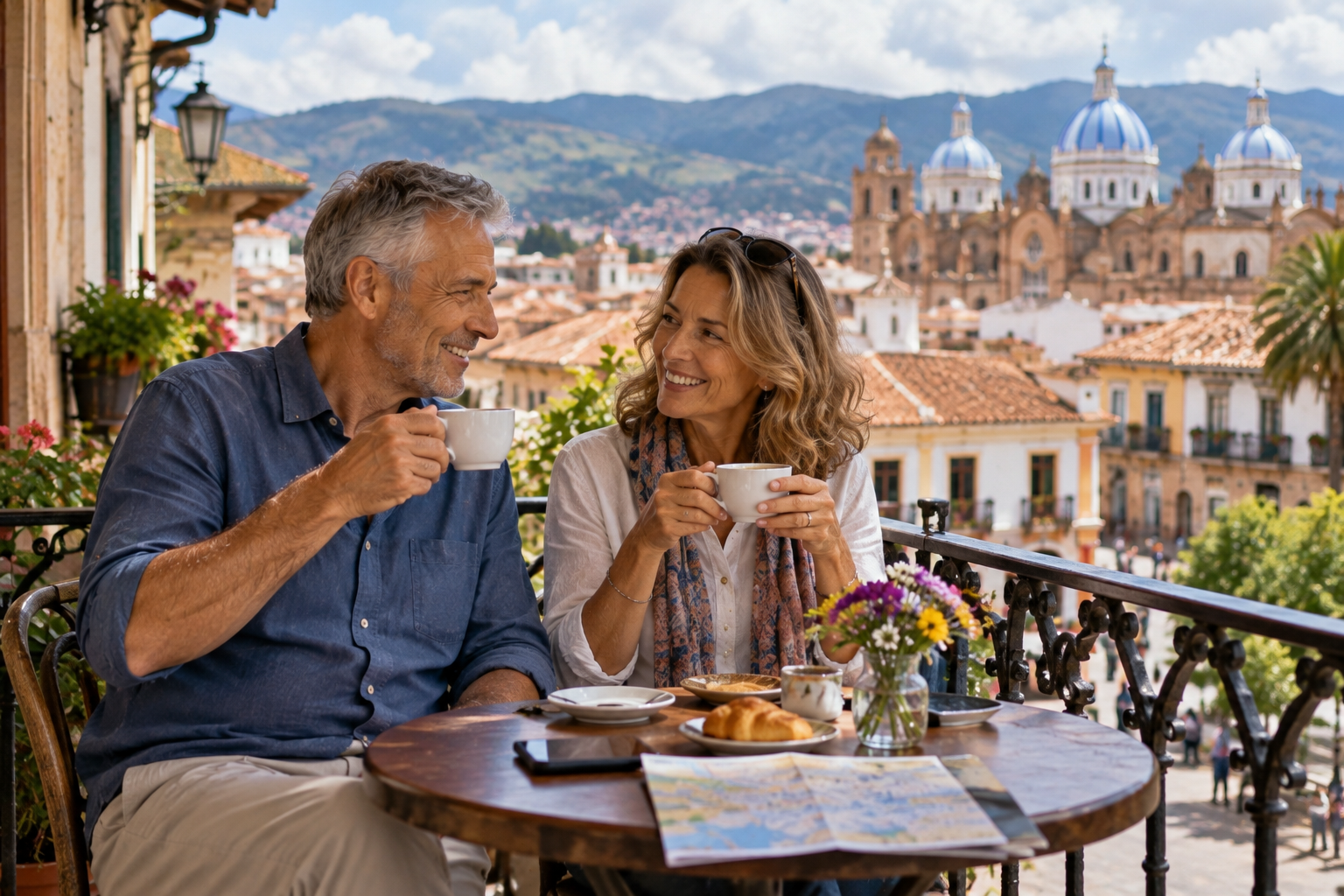
Ecuador’s retirement visa is one of the most accessible in the world, which is another large part of the draw. The pensioner visa, the Visa de Jubilado, requires proof of a guaranteed lifetime pension income of at least three times Ecuador’s basic monthly salary, which for 2026 is around fourteen hundred and fifty dollars a month, with a modest additional amount required per dependent. Social Security qualifies, and because the average American Social Security benefit exceeds that threshold, most retirees clear the bar comfortably, which is exactly how the Carters, on eighteen hundred dollars a month, qualified with room to spare.
The visa is straightforward to obtain, there is no age requirement at all, and it leads, after a relatively short period of temporary residency, to permanent residency and eventually a path to Ecuadorian citizenship, giving a retiree a real sense of permanence rather than a status forever hanging by a thread. For couples thinking in decades rather than years, that durability matters. Compared with the rising income thresholds and complex rules of some other destinations, Ecuador’s requirements are refreshingly modest and clear, a genuine pension-and-paperwork process rather than a wealth test. It is worth engaging a local attorney to handle the application smoothly, as the document requirements and process reward local knowledge, but the fundamental bar is low and well within reach for an ordinary middle-class retiree on Social Security. For the Carters, the ease and modesty of the visa was a large part of what made Ecuador feel genuinely possible in the first place rather than a rich person’s fantasy, a country that does not demand you prove wealth to be welcomed, only that you have a steady, ordinary pension and the will to come. That openness is itself part of the appeal, a reminder that this life is built for regular middle-class retirees, not just the affluent.
Why You Should Test It First
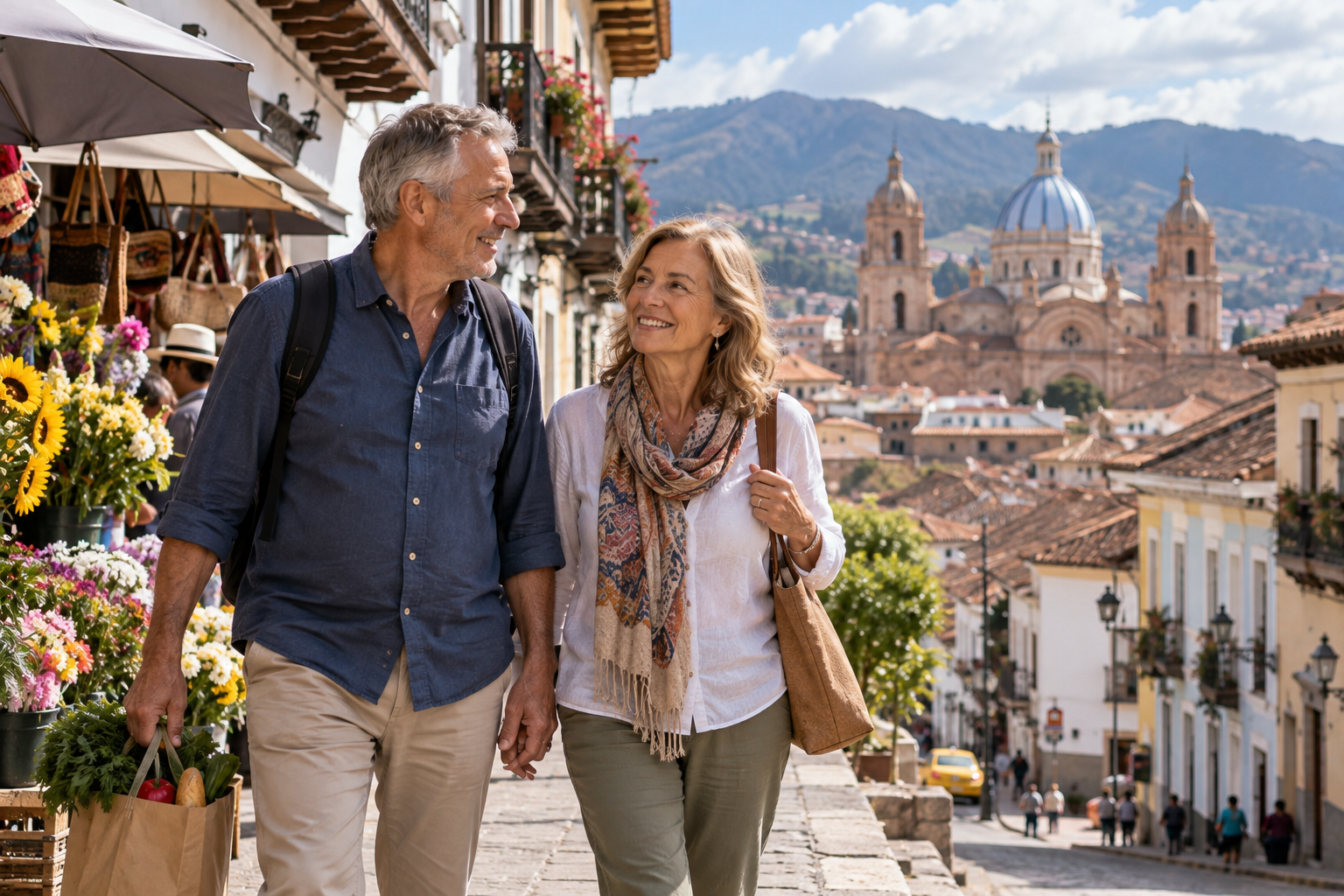
One piece of advice runs through nearly every successful Cuenca story, and the Carters followed it: do not commit sight unseen, and above all, test the altitude before you move. Ecuador makes this easy, granting Americans and Canadians a generous visa-free entry on arrival that can be extended, which gives you months to come down, live in Cuenca as a trial, and find out firsthand whether the thin mountain air agrees with you and whether the daily reality of the place matches the dream. This is not a small formality; it is the single smartest step in the whole process, because the altitude is the one factor that cannot be judged from a spreadsheet and that genuinely does not suit everyone.
The Carters spent an extended stretch in Cuenca before deciding, renting an apartment, testing their bodies against the eight thousand feet, meeting the community, and confirming that the life they imagined held up in the living of it, before they ever filed for a visa or shipped a single box. That trial period, cheap and low-risk thanks to the dollar economy and the modest costs, turned an irreversible-feeling leap into a safe, bounded experiment, and it is exactly why so many people who move to Cuenca this way stay happily rather than discovering a problem too late. For a place whose one real catch is physical and personal, trying before buying is not just prudent; it is essential, and anyone considering Cuenca should plan a long exploratory visit, ideally in no rush, before deciding anything at all.
The City and the Altitude
Cuenca itself is a large part of why people fall for this, because it is genuinely beautiful and culturally rich, not merely cheap. It is a colonial city whose historic center is a UNESCO World Heritage Site, full of cobblestoned streets, red-tiled roofs, grand churches, flowing rivers, and a real intellectual and artistic life, and it enjoys a spring-like climate year-round that is widely considered one of the most pleasant anywhere. It also hosts the largest and most established expat retiree community in all of Ecuador, so newcomers land into a ready-made social world of fellow retirees, clubs, and gatherings, with the infrastructure of English-speaking lawyers, doctors, and services and the easy friendships that make settling into a foreign country far less daunting than it sounds. For many, that soft landing is as decisive a draw as the climate or the cost.
There is, however, one real physical catch: the altitude. Cuenca sits at around eight thousand feet in the Andes, high enough that the thin air is a genuine adjustment for newcomers and a real health consideration for some, particularly anyone with heart or respiratory issues, who should weigh it carefully and perhaps consult a doctor before committing.
Most healthy people adjust within a few weeks, their bodies quietly adapting until they barely think about it again, but it is genuinely not nothing, especially in the first days of shortness of breath on the stairs, and it is the single biggest physical factor that makes Cuenca a wonderful fit for some retirees and a poor one for others. It is the one thing on the whole list that your wallet cannot solve and only your body can answer. On the healthcare front, the news is genuinely reassuring: Cuenca has good private hospitals and excellent, remarkably cheap care, with a doctor visit costing less than a copay back home, and retirees can also enroll in Ecuador’s public IESS system for a modest monthly fee that covers a great deal. For a retiree, knowing that getting sick will not be financially catastrophic is worth an enormous amount of peace of mind. So the city offers beauty, culture, community, and good affordable healthcare, with the thin mountain air as the one real condition attached.
Eighteen Months In: The Honest Verdict
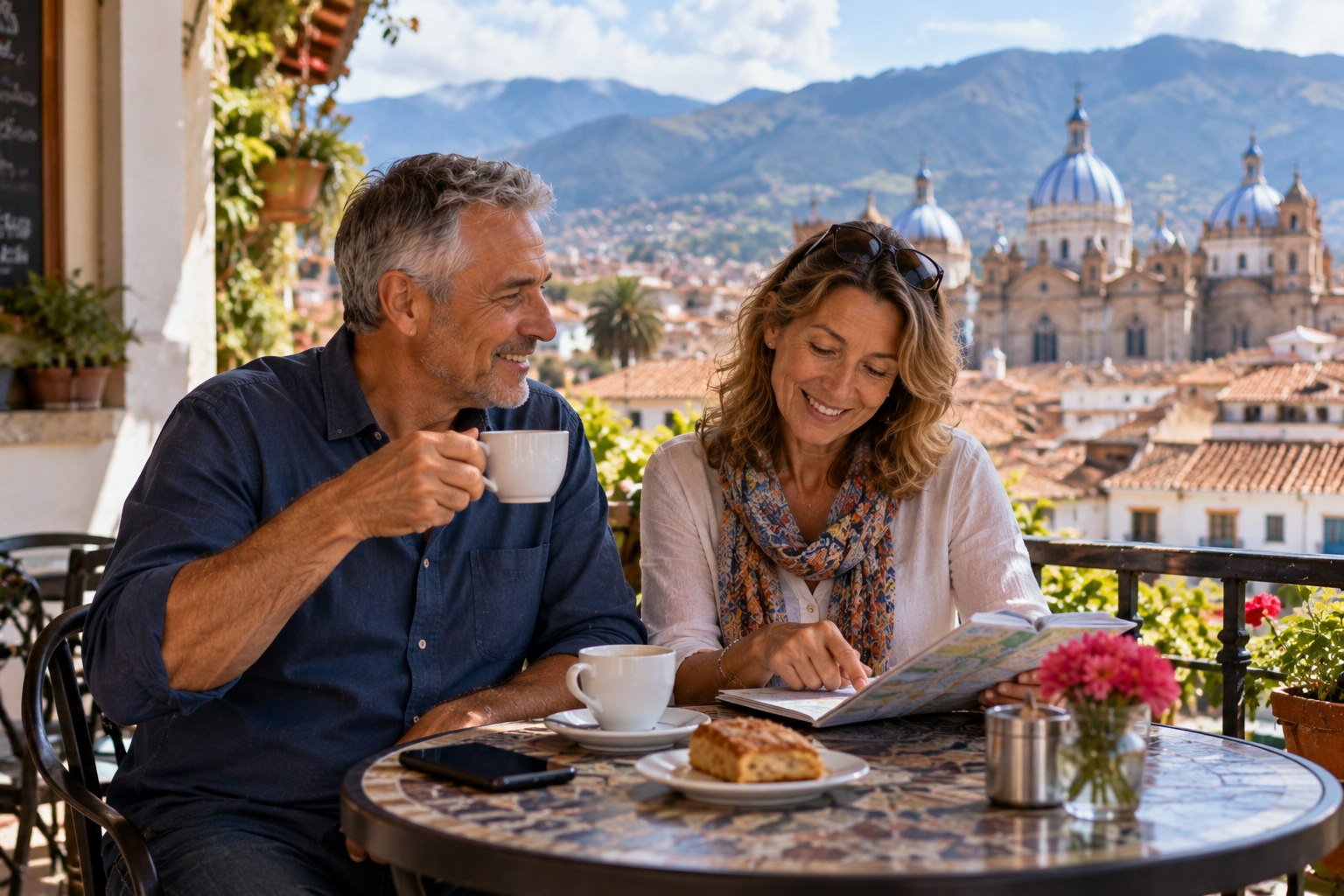
A year and a half in is far enough past the honeymoon to know whether a place is real life, and for the Carters the core bargain has held beautifully. The dollar stability still quietly pays off, the cost of living is still a relief, the city is still beautiful, the climate still lovely, the healthcare still cheap and good, and the community still warm. These are the durable goods that keep people, and they explain why Cuenca has drawn and held North American retirees for so long. The fundamental promise, a stable, affordable, comfortable life in a gorgeous setting, has simply kept being true.
But the honest picture includes real trade-offs. The altitude remains a factor the Carters are always a little aware of, and it is the thing that sends some retirees back down to sea level. More significantly, Ecuador has experienced real political and economic volatility and a deterioration in security in recent years, with rising crime and periods of instability that, while far more acute in certain coastal cities and nowhere near as bad in Cuenca, which has actually ranked among the safer large cities in the region, is nonetheless a genuine national backdrop a prospective retiree should understand clearly and keep an eye on rather than wave away. Choosing Cuenca specifically, rather than the coast, is part of how sensible retirees manage that risk.
The expat community, wonderful as it is for landing, can also become an insular bubble for those who never venture beyond it into real Ecuadorian life. And Ecuador, while served by direct flights to Miami, is still a long way from much of the United States. None of this has driven the Carters home, because for them the dollar simplicity, the cost, the beauty, and the healthcare clearly outweigh the drawbacks. But the honest shape of the deal is this: Cuenca offers one of the most financially serene and genuinely lovely retirements available on a modest income, with the altitude and Ecuador’s broader instability as the real factors to weigh honestly against it. For the right couple, healthy enough for the altitude, drawn to beauty and culture and craving the rare peace of a budget immune to currency swings, it is a genuinely wonderful life.

About the Author: Ruben, co-founder of Gamintraveler.com since 2014, is a seasoned traveler from Spain who has explored over 100 countries since 2009. Known for his extensive travel adventures across South America, Europe, the US, Australia, New Zealand, Asia, and Africa, Ruben combines his passion for adventurous yet sustainable living with his love for cycling, highlighted by his remarkable 5-month bicycle journey from Spain to Norway. He currently resides in Spain, where he continues sharing his travel experiences with his partner, Rachel, and their son, Han.