
When Frank told his adult children he was retiring to Medellin, they said no. Not literally, since he was a grown man making his own choice, but the message was unmistakable: they were alarmed, they thought it was unsafe, and the word Colombia conjured cartels, kidnapping, and the long shadow of Pablo Escobar. Frank, a composite assembled from the real patterns of the many retirees who have made this exact move over their families’ objections, went anyway, on about nineteen hundred dollars a month, and two years in he is quietly, happily settled.
His story is partly about the money and the place, but it is just as much about the gap between Colombia’s reputation and Colombia’s reality, and about moving abroad when the people you love are afraid for you. Here is why his kids objected, how the city reinvented itself, what he actually found, the money and the easy visa, and the honest, unvarnished safety picture two years in. It is one of the most instructive of all these stories, because it is really about the distance between what a place is reputed to be and what it has actually become.
What follows is why his family said no, the city that changed their minds, the money and the easy visa, the honest truth about safety, and the year-two verdict.
Why His Family Said No
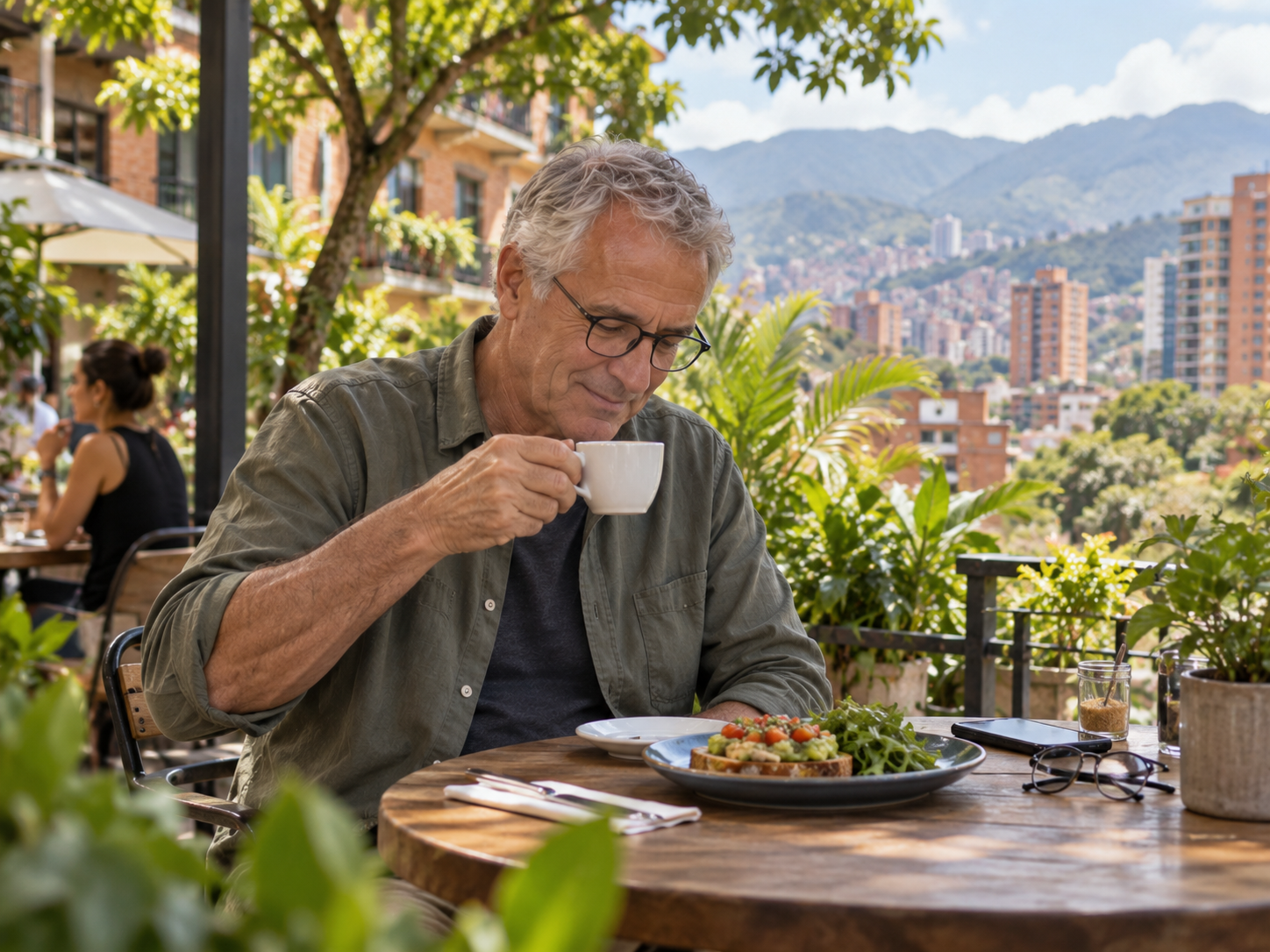
It is worth taking the children’s fear seriously rather than dismissing it, because it came from a real place, even if it was out of date. For Americans who grew up watching the news in the 1980s and 1990s, Colombia and Medellin specifically are seared into memory as the global capital of cocaine and violence, the city of Escobar, car bombs, and a murder rate that was once among the highest on earth. That image is powerful and persistent, and it is exactly what flashed through his children’s minds when Frank announced his plan. Their alarm was not irrational or overprotective; it was based on a Colombia that genuinely existed, once, and that dominated the headlines of their formative years. You cannot fault people for fearing the Colombia they were shown, only for assuming it had stayed frozen in that moment for forty years.
Layered on top of the specific Colombia fear was the more general worry that adult children feel about any parent moving far away, the protective anxiety about who will help if something goes wrong, the sense that a safe, familiar life is being traded for a risky unknown. Put the outdated-but-vivid reputation of Medellin together with that universal parental-role-reversal worry, and you get a very understandable, very emphatic no. Frank did not brush it aside; he listened, he understood it, and then he made the case, patiently, that the city his children were picturing was not the city that exists today, and that he had looked hard at the real, current situation rather than the old movie playing in their heads. That distinction, between the Colombia of reputation and the Colombia of now, is the hinge the whole story turns on.
The City That Changed Their Minds
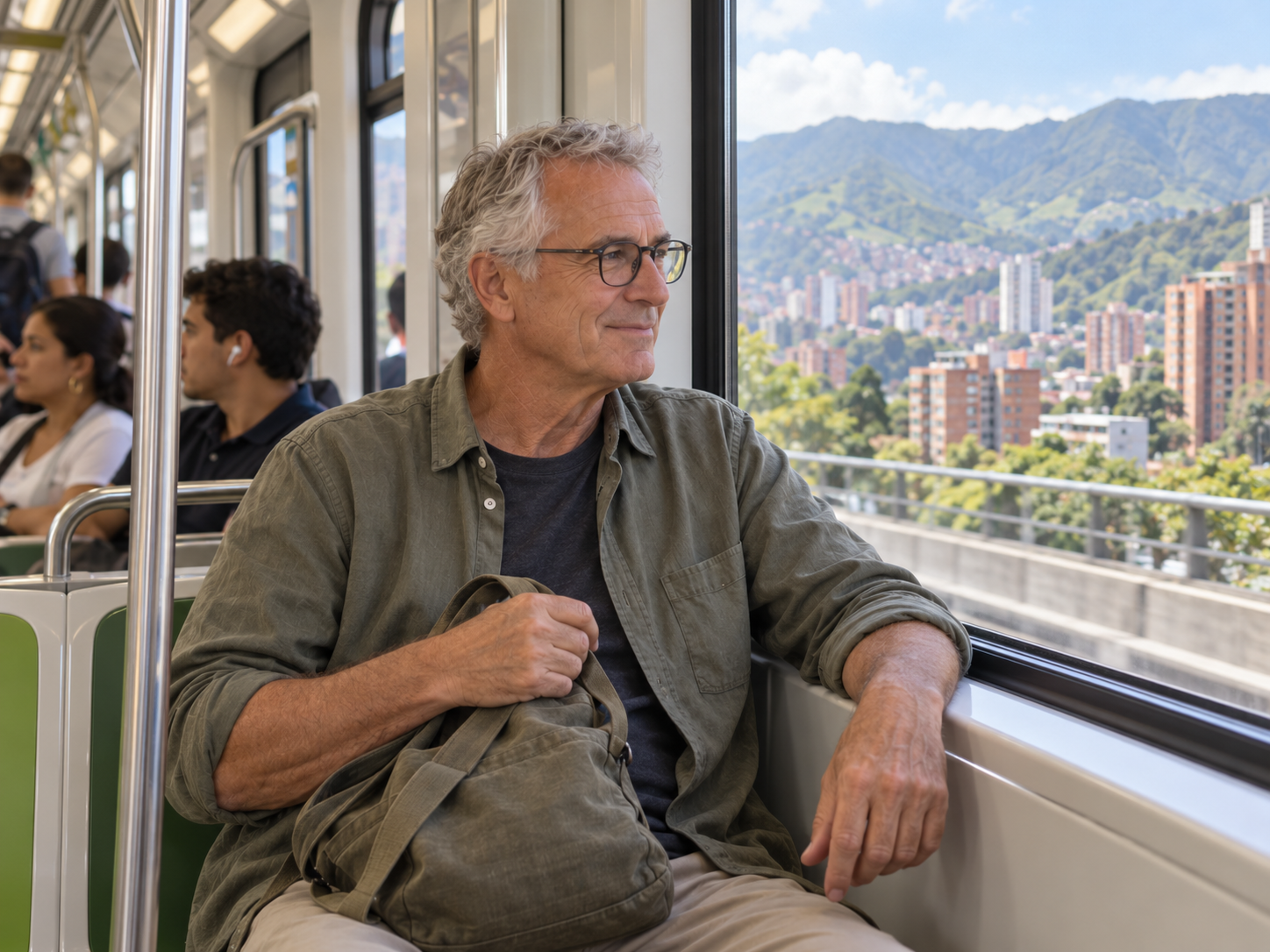
The Medellin Frank actually moved to is one of the great urban transformation stories of the modern world. Over the past two to three decades, the city has reinvented itself from a byword for violence into a genuinely modern, innovative, and vibrant metropolis, famous now for its gleaming metro system, its cable cars climbing the hillsides, its flower-filled plazas, and a creative, entrepreneurial energy that has made it one of the fastest-growing destinations for retirees and remote workers in the Americas. It wears the nickname City of Eternal Spring for good reason: sitting in a green valley at a comfortable mid-altitude, lower and easier on the body than Andean Cuenca, it enjoys mild, spring-like temperatures in the low seventies year-round, no winter, no brutal summer, no air conditioning needed, just a perpetual pleasant mildness that locals and newcomers alike find almost unreasonably perfect. The weather alone converts a lot of skeptics.
For Frank, the daily reality is a world away from his children’s fears. He lives in a comfortable, leafy neighborhood popular with expats, surrounded by excellent restaurants, specialty cafes, green parks, and a large, welcoming community of fellow foreigners and warm, famously friendly locals, the paisas whose hospitality is a point of regional pride. The loneliness that quietly ends so many retirements abroad has simply never been a problem for him here. He rides the clean, efficient metro, enjoys the perfect climate, eats well, and has built a full and social life. When his children finally came to visit, as they eventually did, the city they found bore no resemblance to the one they had dreaded, and the visit did more to ease their fears than any amount of his reassurance ever could, because seeing their father thriving in a modern, pleasant, functioning city rewrote the story in their heads. The real Medellin, it turns out, is its own best argument.
How a City Reinvented Itself
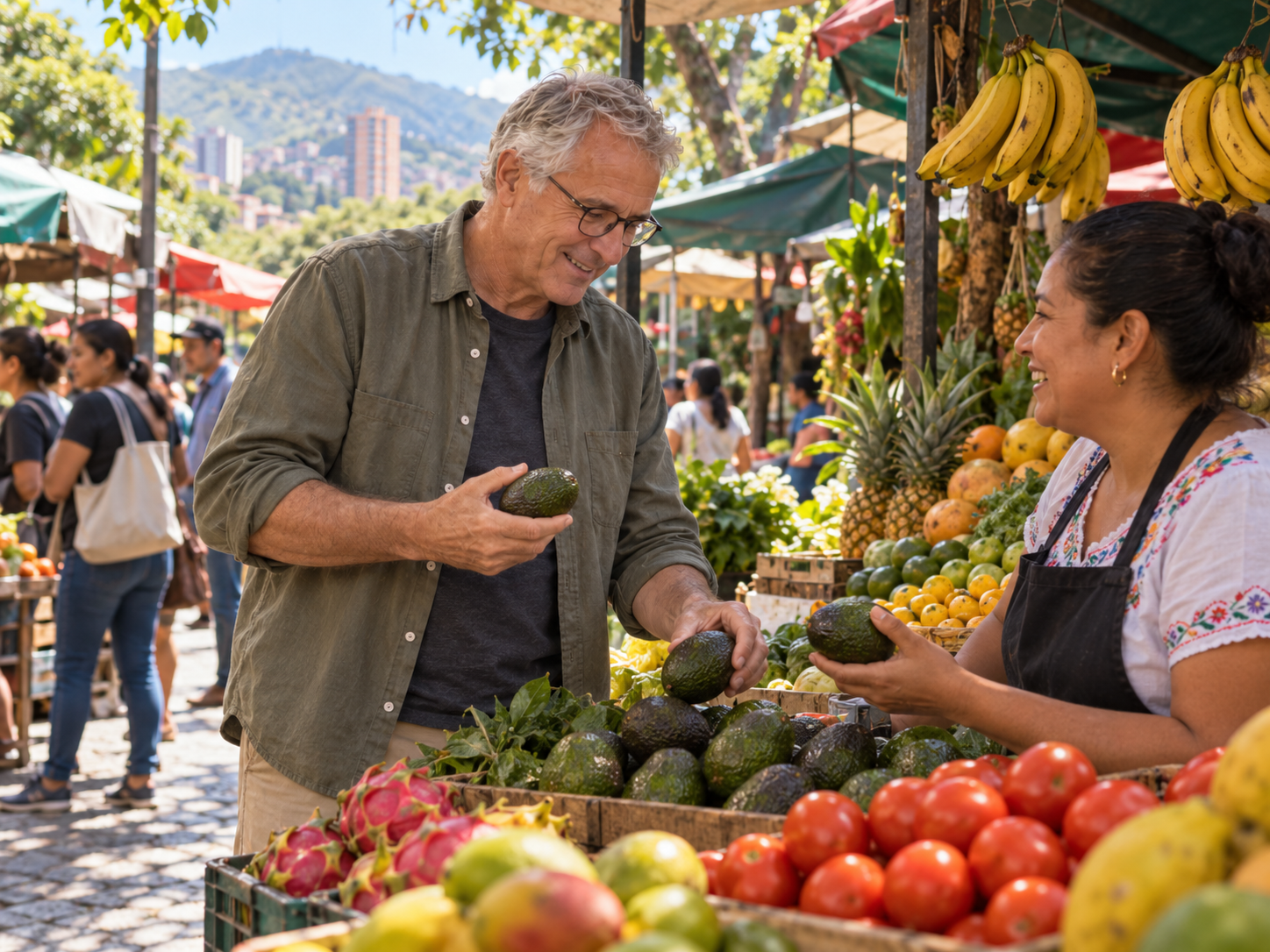
It is worth pausing on just how that transformation happened, because understanding it is part of what reassures a wary visitor that the change is real and durable rather than cosmetic. Medellin did not simply get lucky or wait out its troubles; over the past couple of decades it deliberately rebuilt itself, and the effort became a case study admired by urban planners around the world. The city invested, strikingly, in its poorest and most dangerous hillside neighborhoods, the comunas that were once no-go zones, threading them with cable-car lines that connected them to the rest of the city, building bright modern libraries and public spaces where there had been neglect, and treating social investment as a crime-fighting strategy.
The results are visible everywhere, and they are a large part of what wins over skeptical visitors. The metro system is clean, efficient, and a genuine point of civic pride that locals treat with care. Formerly notorious neighborhoods like Comuna 13 have become symbols of the turnaround, now safe enough to draw tourists for their art and their story. The point is not that the past did not happen or that all problems are solved, but that the recovery is deep and structural, the product of years of deliberate, celebrated effort rather than a fragile lull. For Frank, knowing the transformation was real and intentional, something the city built on purpose and continues to invest in, gave him the confidence to move that his children, seeing only the old reputation, could not share from a distance. A city that climbed out of that darkness through determined reinvention is a very different proposition from one merely hoping its troubles stay buried.
The Money and the Easy Visa
The financial case is as strong as the lifestyle one. On about nineteen hundred dollars a month, Frank lives very comfortably as a single retiree in Medellin, a sum that covers a nice apartment, dining out regularly, excellent private healthcare, transport, and an active social life with room to spare. The cost of living is low enough that a modest American income stretches into a genuinely good life, and Colombia’s particular strength, which mattered a great deal to a retiree Frank’s age, is its healthcare: the country is a recognized medical-tourism destination with excellent hospitals, and comprehensive private health coverage costs a small fraction of US prices. For Frank, who like any retiree thinks about his health more than he used to, knowing he could get genuinely first-rate care quickly and affordably, often at hospitals that rank among the best in Latin America, was a big and reassuring part of feeling secure in the whole move. Good cheap healthcare turns getting older abroad from a gamble into a comfort.
The visa, too, is refreshingly accessible. Colombia’s Migrant retirement visa, the Pensionado, requires proof of a lifetime pension income equal to three times the Colombian minimum wage, which in 2026 works out to somewhere around sixteen to seventeen hundred dollars a month, a bar that Frank’s nineteen hundred dollars clears and that most Social Security recipients meet. There is no large investment or deposit required, no property purchase, no six-figure sum to park in a local bank, just proof of steady lifetime pension income plus the required health insurance policy, which makes Colombia one of the most straightforward and welcoming retirement destinations anywhere in which to gain legal residency. It asks for proof of a modest income, not proof of wealth, which is exactly the right question for a middle-class retiree. The visa leads, over a few years, toward permanent residency. Between the low cost, the superb cheap healthcare, and the easy income-based visa, the practical machinery of retiring in Medellin is genuinely friendly to an ordinary middle-class retiree, which is a large part of why so many are quietly doing it.
The Honest Truth About Safety

Here is where honesty matters most, because safety is the whole reason his children said no, and the truth is more nuanced than either the terrifying reputation or the breezy it’s-totally-fine reassurance. The reality is this: Medellin today is dramatically safer than its violent past, and the neighborhoods where expats and retirees actually live have crime rates broadly comparable to many mid-sized American cities. The transformation is real, and the fear rooted in the Escobar era is genuinely out of date. Frank goes about an entirely ordinary daily life, rides the metro to run his errands, walks his neighborhood in the evening, meets friends for dinner, and feels genuinely safe doing all of it, as the great majority of the city’s millions of residents and its large expat community do every single day. The constant danger his children imagined simply is not the texture of normal life here.
But it is not a risk-free paradise, and pretending otherwise would be dishonest and even dangerous. Street crime and robbery are real, which is why locals live by the phrase no dar papaya, roughly meaning do not make yourself an easy target by flashing wealth or being careless. And there is a specific, serious modern hazard that has claimed foreign victims: robberies involving incapacitating drugs, often via dating apps or nightlife, which have led to tragedies and demand real caution. So the honest picture Frank lives by is neither his children’s outdated terror nor the naive it-is-totally-safe dismissal some expats offer, but a clear-eyed middle truth: Medellin is far, far safer than its reputation and perfectly livable with ordinary big-city street smarts, but it genuinely rewards caution and punishes carelessness, and so a sensible retiree stays aware of his surroundings, does not flash valuables or an expensive phone, is careful with strangers and nightlife and dating apps, and treats the city with the same practical respect and healthy wariness he would give any large city anywhere in the world, including back home. That posture, neither fearful nor foolish, is what makes the whole thing work. Handled that way, as Frank handles it, the safety question becomes manageable rather than frightening, which is exactly the reality his kids could not see from a distance.
Year Two: The Verdict
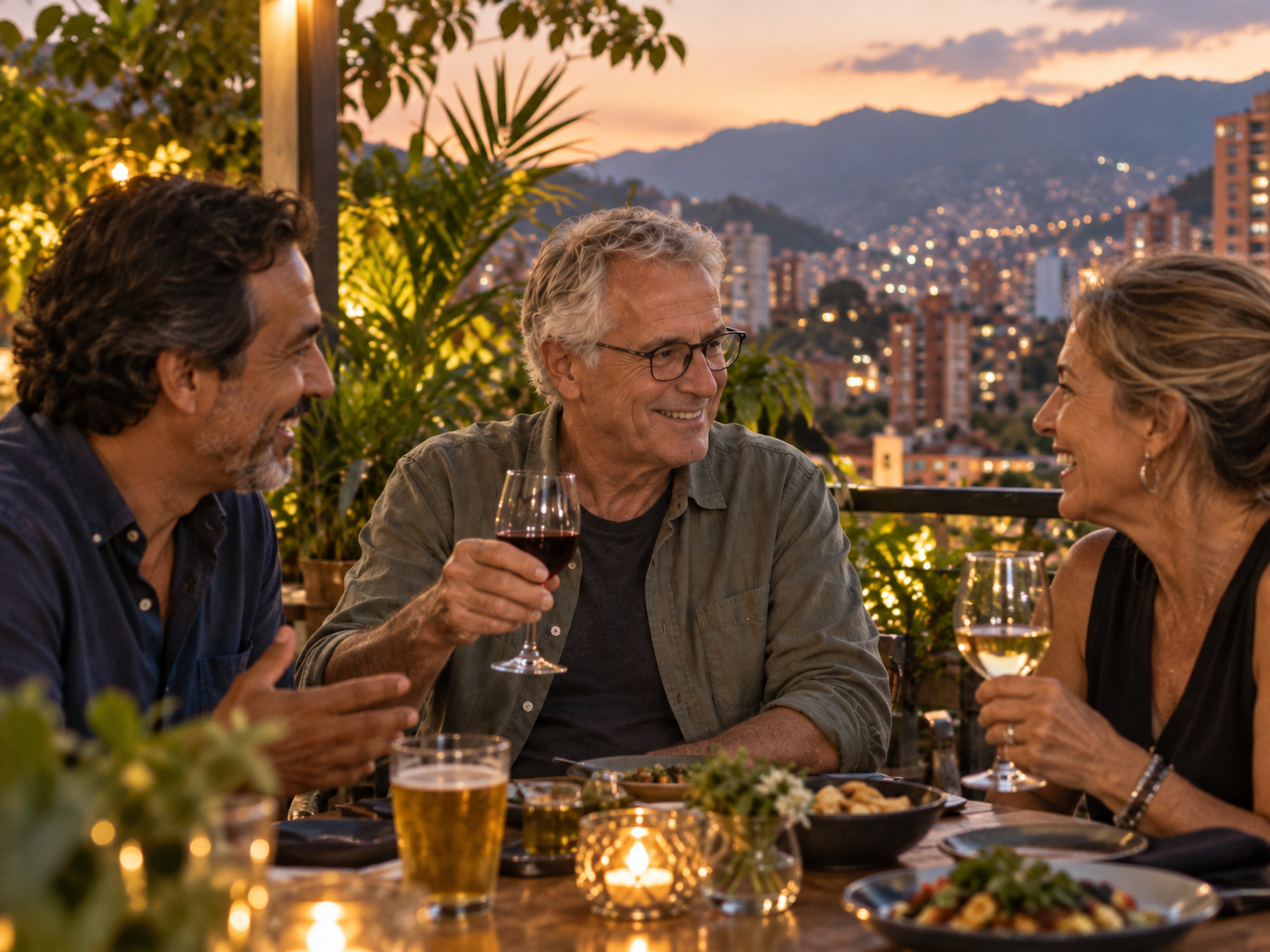
Two years in, the verdict for Frank is a clear and contented yes, and the gap between his children’s fears and his lived reality has become the quiet center of the whole story. The things that drew him in the first place have all quietly held: the perfect spring climate, the genuinely low cost of living, the excellent and cheap healthcare, the vibrant modern city with its endless things to do, and the warm, easy community of friends. None of it was a honeymoon illusion that faded; all of it turned out to be simply true. He is measurably healthier for all the walking and the gentle climate, far more social than he was in his quiet American suburb, and more financially relaxed than he has been in decades, and the strange, frightening-sounding daily life his family feared he was choosing has become, simply and undramatically, his good and ordinary and rather enviable life. The adventure settled, as adventures do, into a routine, and the routine turned out to be lovely.
The honest caveats remain, and he respects them. Safety requires ongoing, sensible caution rather than complacency. The language matters, and his life is richer for the Spanish he has worked to learn, while those who rely only on the expat bubble miss much of what the city offers.
And the distance from family in the US is real and he feels it, though Colombia’s relative proximity, with direct flights of just a few hours to several American cities, makes trips home far easier, cheaper, and more frequent than they would ever be from somewhere like Thailand. He can be at his daughter’s door in an afternoon if he needs to be, which quietly matters more than almost anything.
But none of it has shaken his conviction that going, over his children’s objections, was right. The deepest lesson of Frank’s two years is not really about Colombia at all; it is that the reputation of a place and the reality of it can be two very different things, that love and fear can make the people closest to us wrong about a choice that is right, and that sometimes the best answer to a family’s frightened no is simply to go, live well and carefully, and let a visit and a thriving life make the case that words could not. His kids said no. Medellin, in the end, said otherwise.

About the Author: Ruben, co-founder of Gamintraveler.com since 2014, is a seasoned traveler from Spain who has explored over 100 countries since 2009. Known for his extensive travel adventures across South America, Europe, the US, Australia, New Zealand, Asia, and Africa, Ruben combines his passion for adventurous yet sustainable living with his love for cycling, highlighted by his remarkable 5-month bicycle journey from Spain to Norway. He currently resides in Spain, where he continues sharing his travel experiences with his partner, Rachel, and their son, Han.